Station plots on a weather chart
A station circle encodes cloud cover (how much of the circle is filled), a wind barb (from where the wind blows, with feathers for speed in knots), and often a pressure value. One SailPrep diagram is read as northwest 20 knots with 50% cloud.
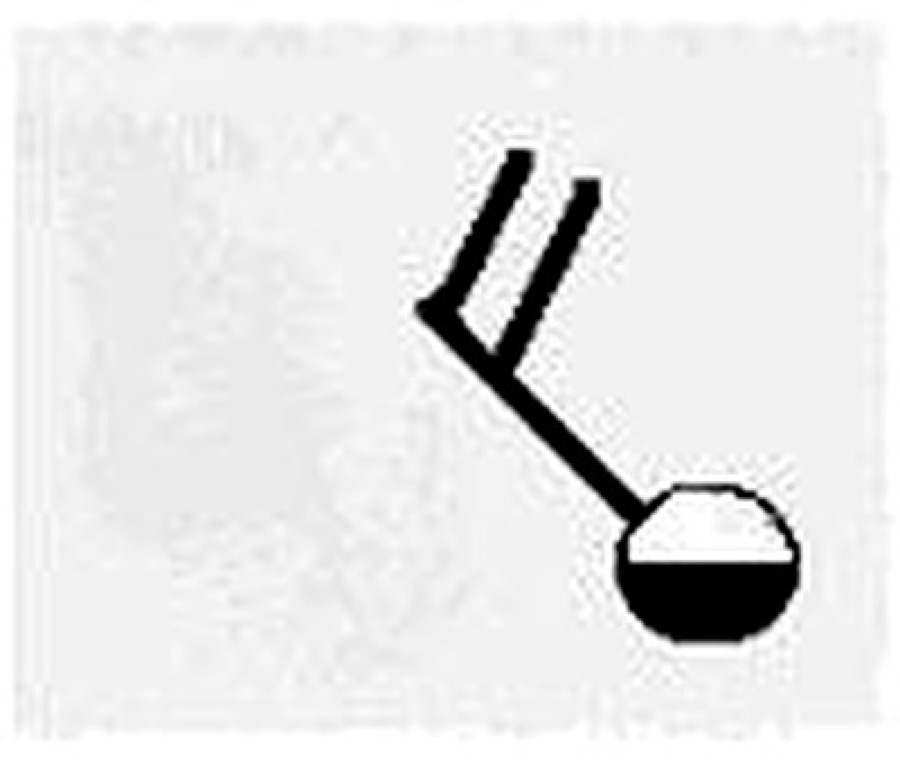
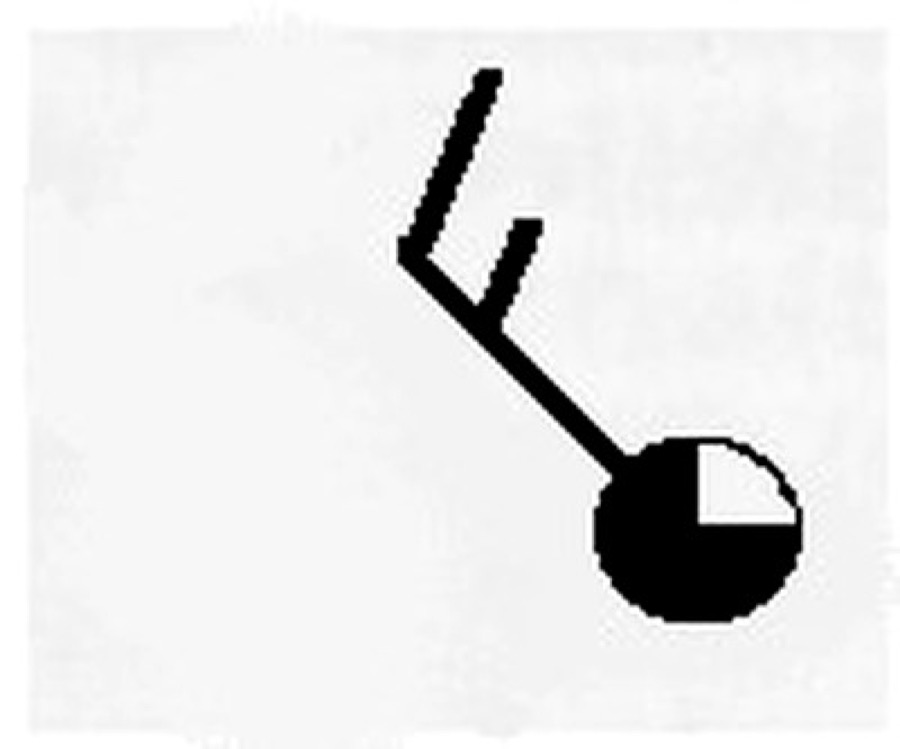
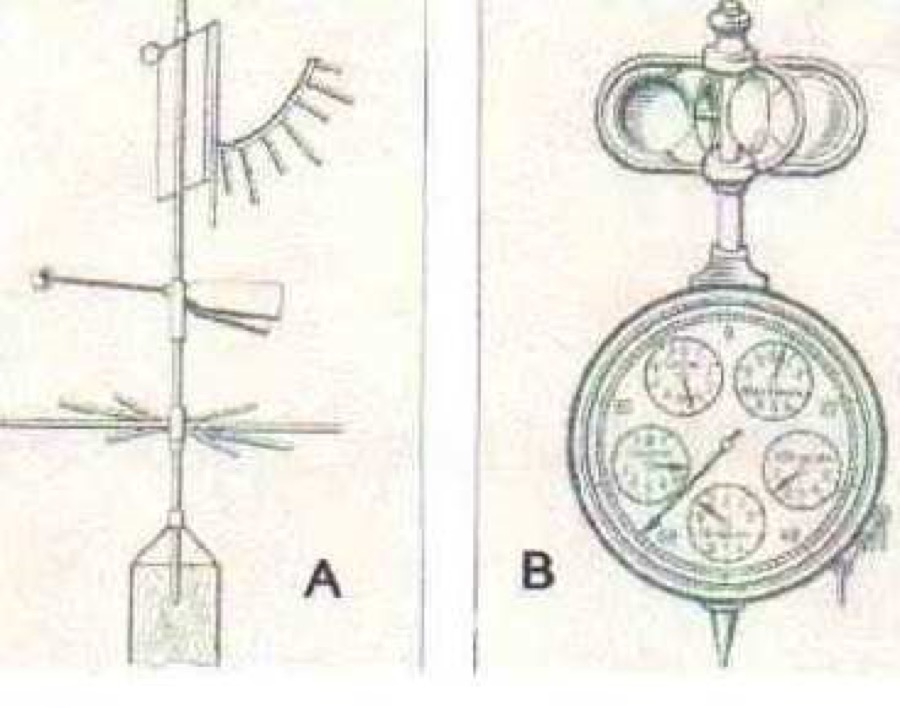
A weather vane on deck is the analogue instrument: it points into the wind. Charts talk in true direction; the boat feels apparent wind — do not mix those two in an answer.
Wind rose
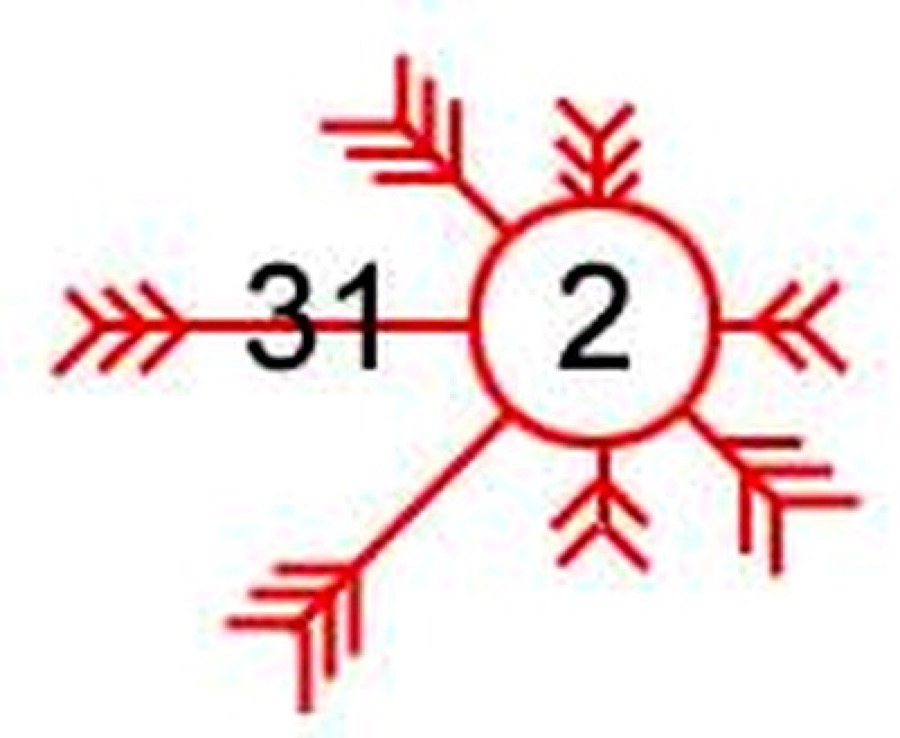
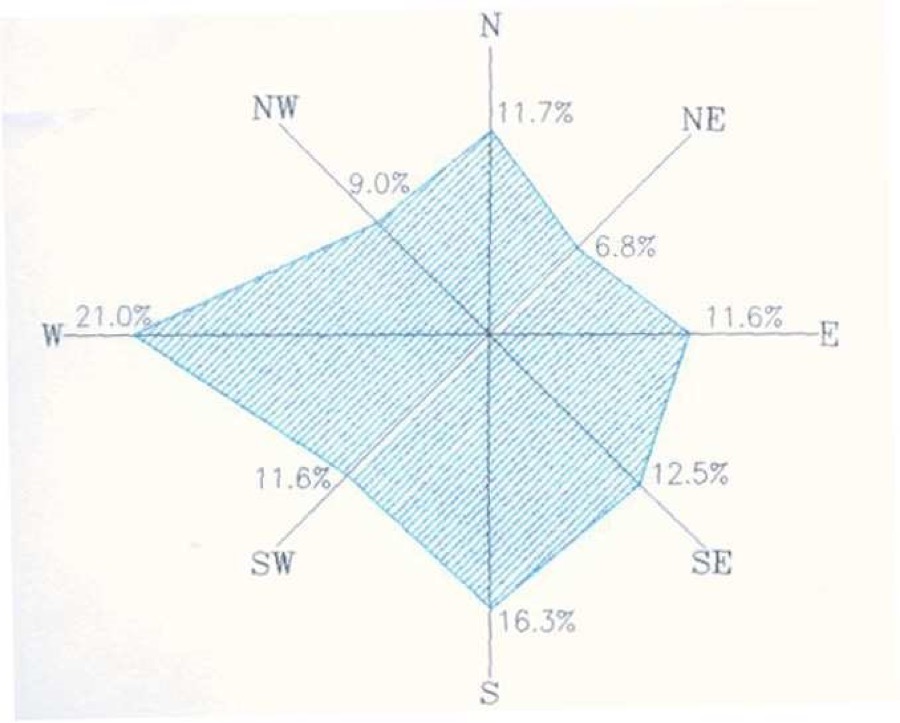
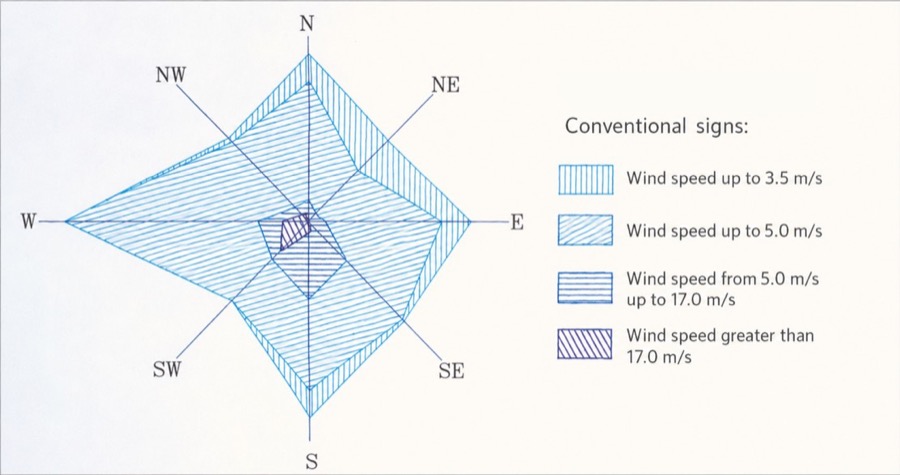
A wind rose summarises how often the wind blows from each compass point at a place, sometimes with speed bands. It is climatology, not today’s forecast — useful for choosing an anchorage or a season, not for a 12-hour passage plan.
Highs, lows, and isobars
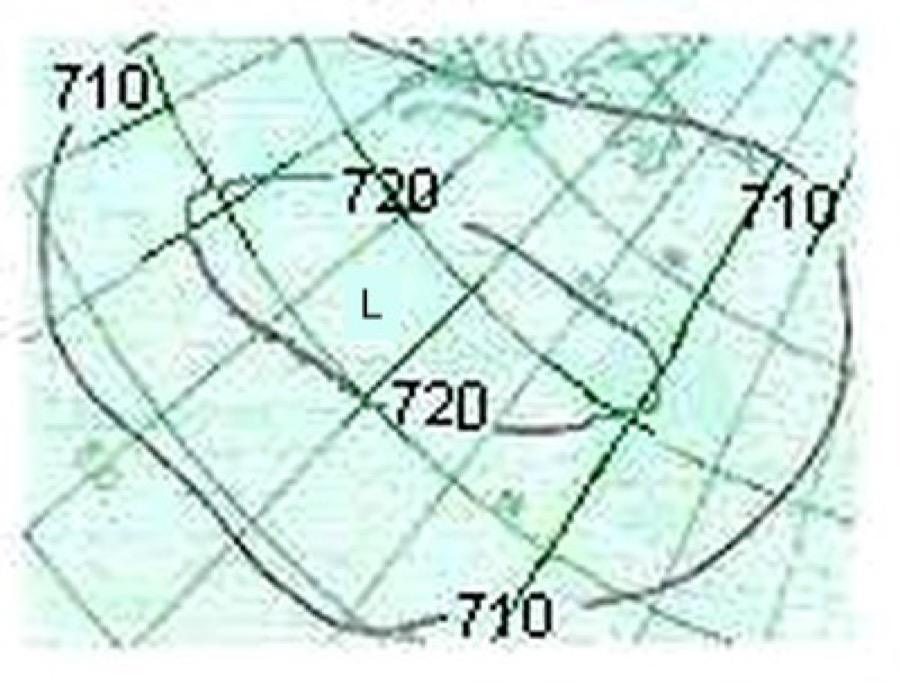
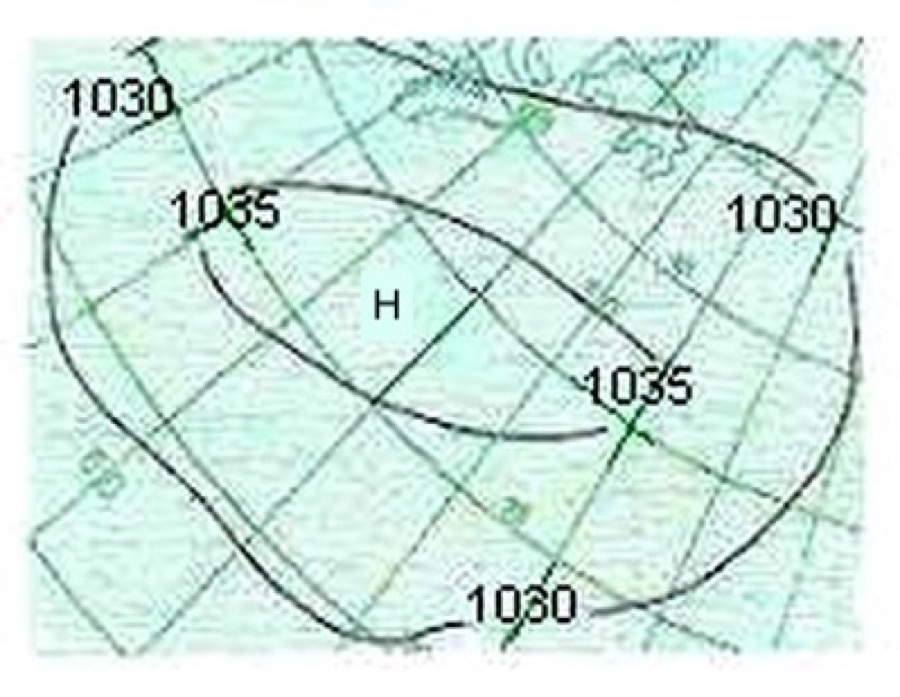
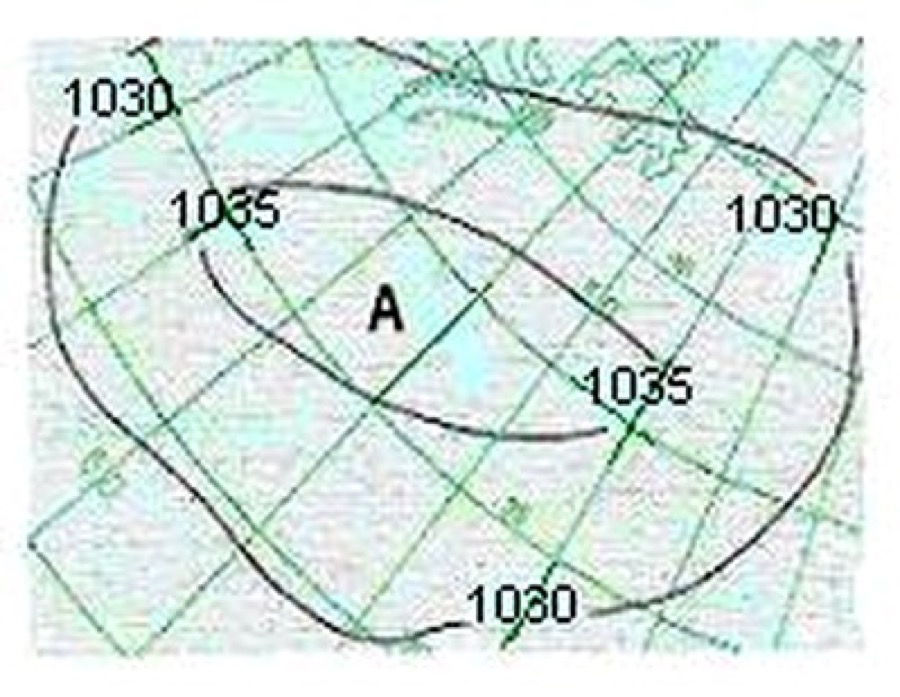
Isobars are lines of equal pressure in hectopascals. Tight isobars mean stronger geostrophic wind. In the northern hemisphere wind blows anticlockwise around a low and clockwise around a high, slightly across the isobars toward low pressure at the surface.
A developing low with a warm and cold front is a passage-maker: rain on the warm front, a veer and harder rain on the cold front, then clearer polar air. Clouds are classed by height — high, middle, low, and clouds of vertical development (cumulonimbus).
Sea breeze and Beaufort
A coastal breeze reverses twice a day: by day from sea to land (sea breeze) as the shore heats; by night from land to sea (land breeze). It can add to or cancel the gradient wind — the reason a forecast “10 knots” feels like 18 in a sunny afternoon bay.
Wind force in exams is described on the Beaufort scale (points, not just knots). Know the sea state that goes with force 4–6 as a skipper; force 8 is a gale. Combine Beaufort with fetch, depth, and tidal stream before you decide to leave.
Exam habits
- Barb points to where the wind is going? No — meteorologists draw the barb from the direction the wind comes from.
- Filled station circle = more cloud, not more wind.
- Low = counterclockwise (NH), bad weather more likely. High = clockwise, often fair but fog possible.
- Wind rose ≠ forecast. Isobar chart = synoptic now.

Study with SailPrep
Flashcards, quizzes, and reminders live in the app. Download free and keep revising.
Related guides
This article is for study and revision. It is not legal advice. Always check the official COLREGs, IALA, CEVNI, and local authority texts. SailPrep is an independent study aid and is not affiliated with LBS, the RYA, or any certification body.