How examiners think about knots
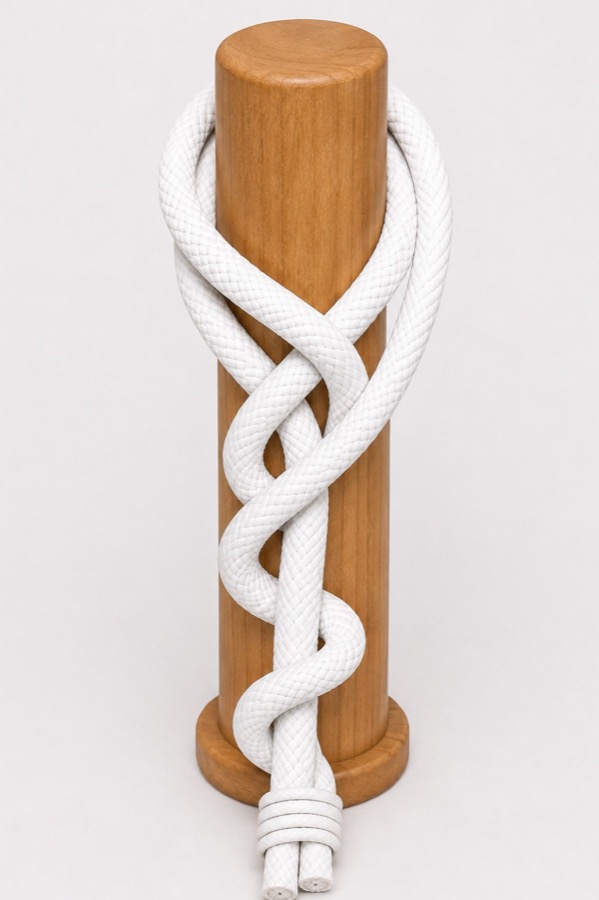
On a yacht, a knot is a decision: stop a tail running, join two lines, make a loop that will not crush, or hitch to a post so you can still cast off. The SailPrep cards group the same knots the LBS practical knot test uses. A three-strand plain-laid rope shows a clockwise (right-hand) lay when you look at the end — useful background, but the pictures in the exam are the knots themselves.
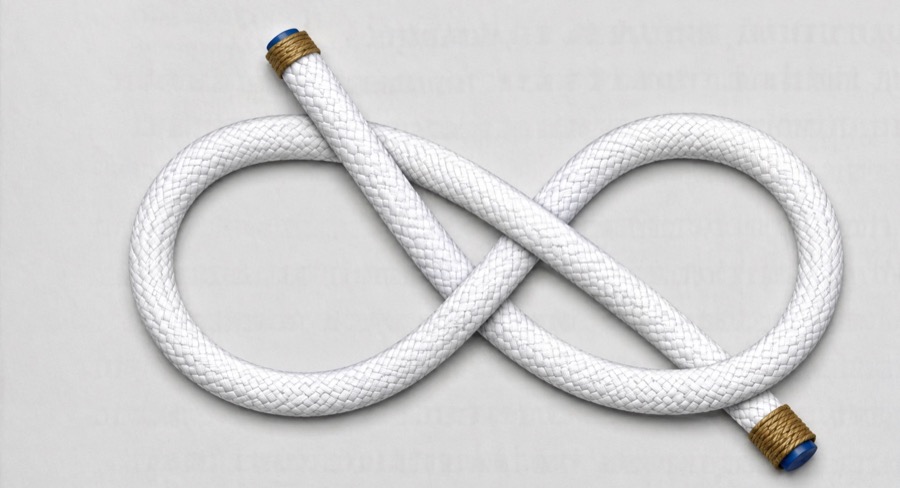
Stopper: figure-of-eight
A figure-of-eight is tied in the tail so the line cannot run back through a block or fairlead. Pass the end around the standing part in an “8” and back through the first loop. After a load it still unties, unlike a jammed overhand knot.
Joining two lines
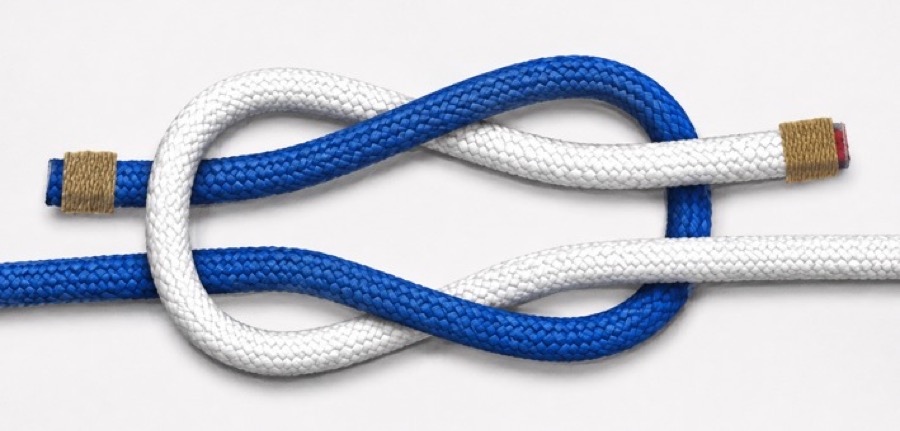
Reef knot
Use a reef knot (square knot) for two lines of similar size, or to tie in a reef. The memory is “right over left, then left over right”. Reverse the second half and you get a granny knot, which can slip. Do not use a reef knot as a bend between two different thicknesses — that is a sheet-bend job.
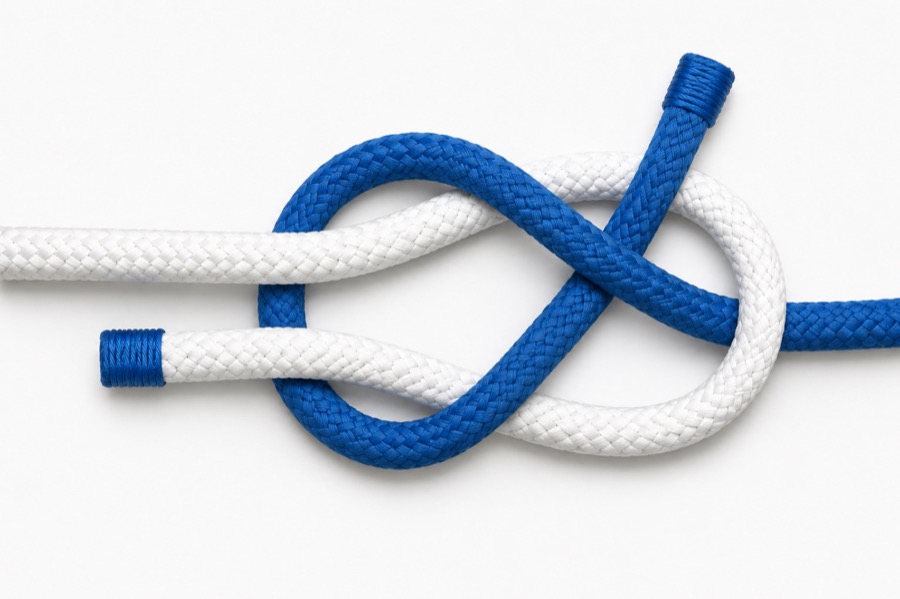
Sheet bend
A sheet bend joins different thicknesses. Form a bight in the thicker line; the thinner line comes up through the bight, around the standing parts, and tucks under itself. The tails should finish on the same side.
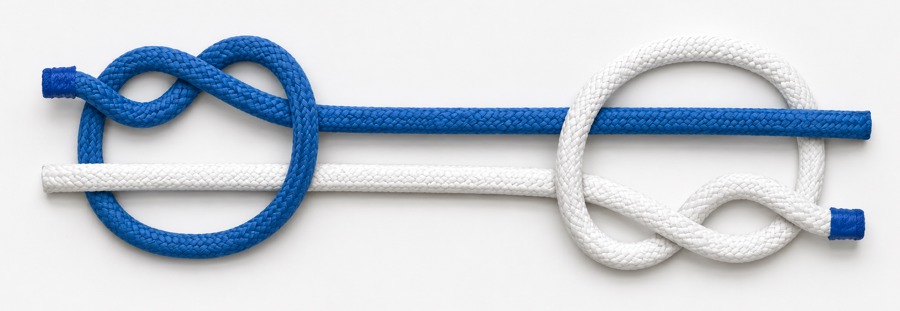
Double fisherman’s
Each tail is tied around the other line with a double overhand. Under load the two knots lock. Common for thin line or joining two ends that must not slip.
Loops that do not jam
Bowline
The bowline makes a fixed loop that does not choke under load — rescue, sheets, and many deck jobs. Mnemonic: the rabbit comes out of the hole, around the tree, and back down the hole. Dress it tight; a sloppy bowline can capsize.
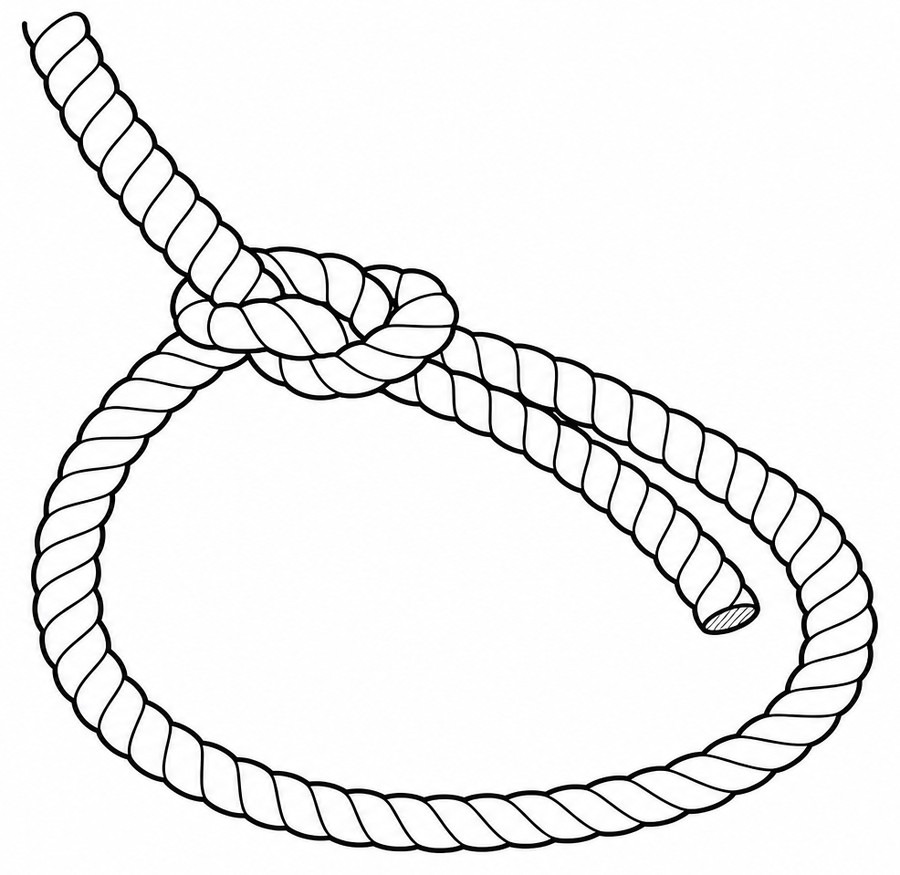
Bowline on a bight
Tied in the middle of a rope, it gives two fixed loops. Useful for lifting or seating a person because the load splits across two loops.
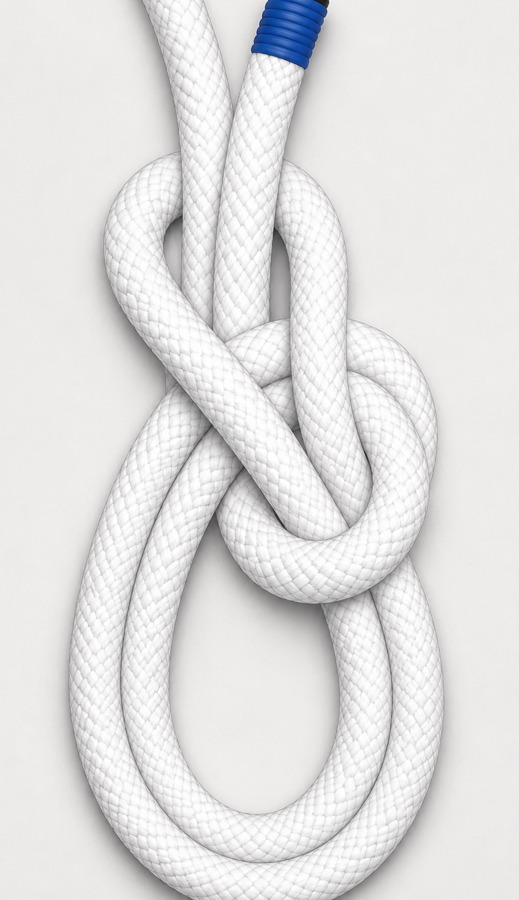
Hitches to a post, rail, or bollard
Clove hitch
A quick hitch: two turns, working end tucked under the last. Fine on a rail or spar while you work. It can work loose if the spar rolls — backing it up, or using a double clove hitch (extra turn), grips better and still unties.
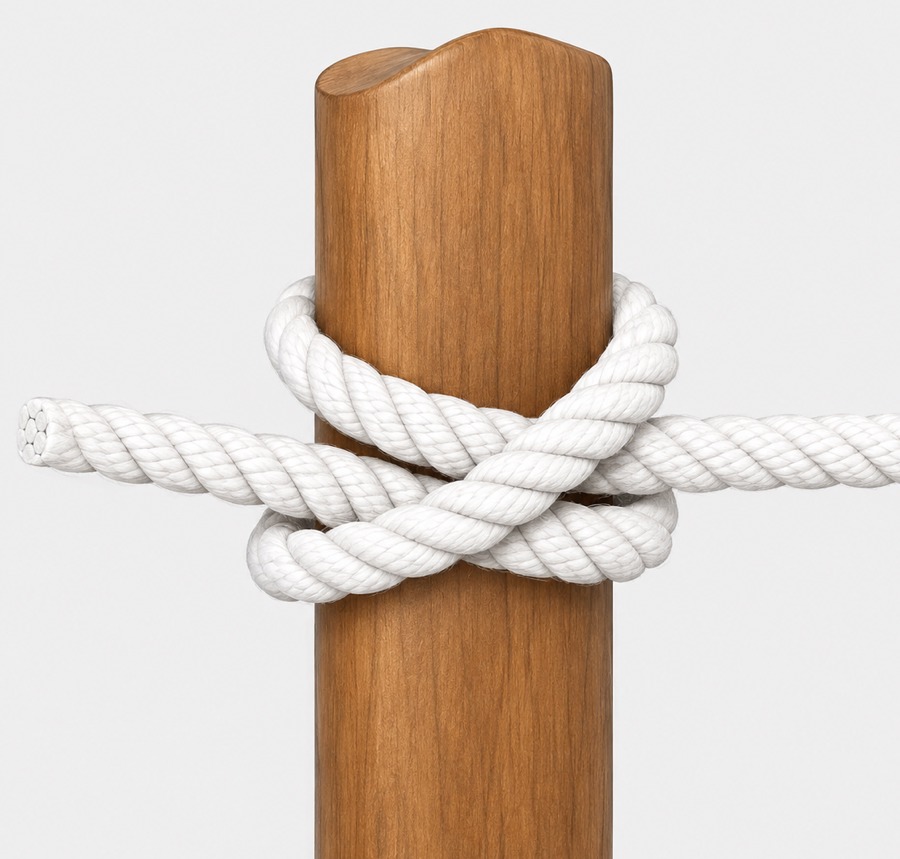
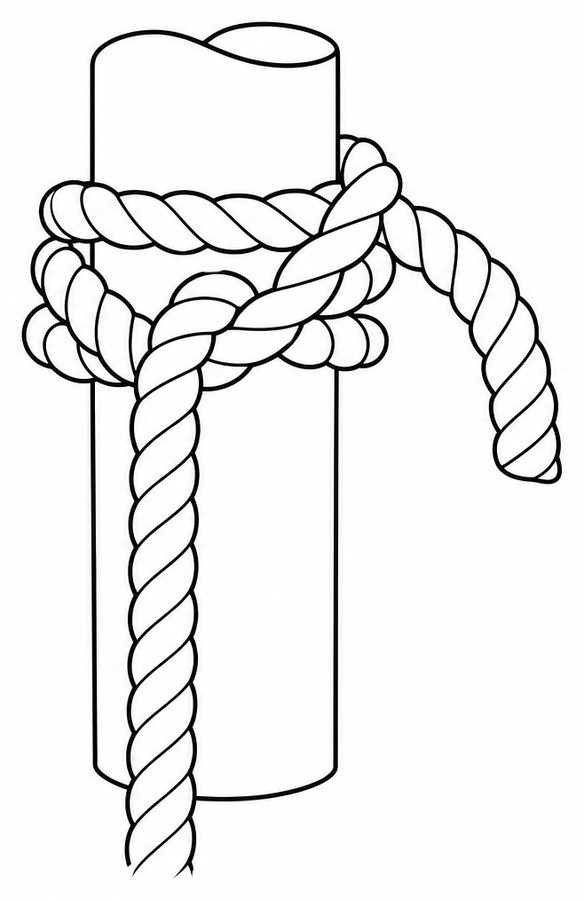
Round turn and two half hitches
The standard secure mooring hitch: a full round turn on the bollard takes the chafe, then two half hitches on the standing part lock it. You can still ease or cast off under control.
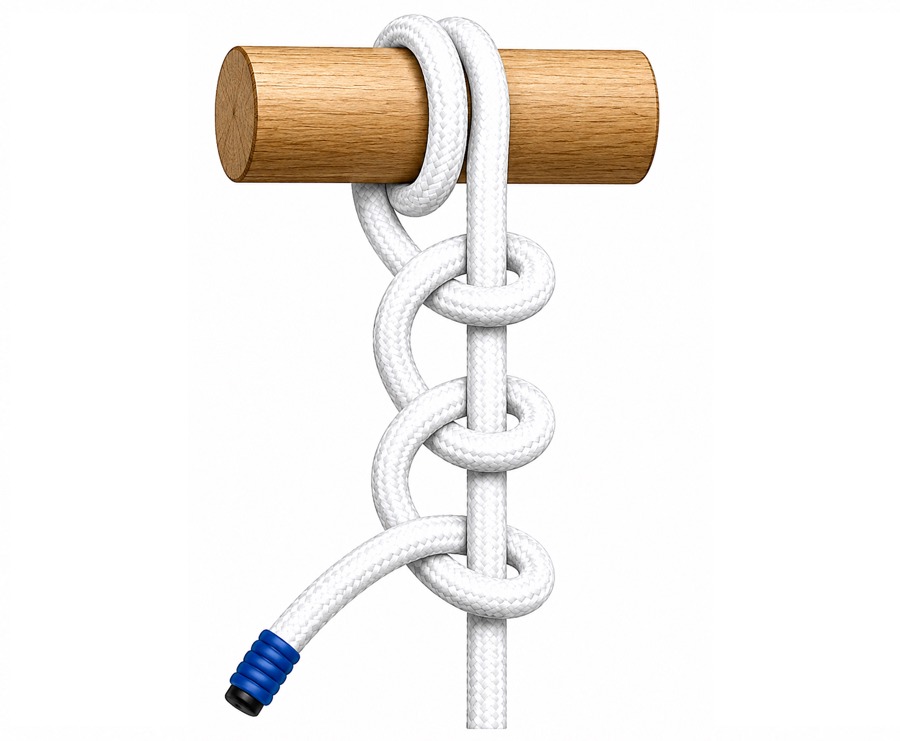
Towing hitch
Same idea on a cleat, bollard, or ring for a towline: round turn, then two or three half hitches on the standing part so it holds while towing and can still be thrown off when the tow ends.
Exam habits
- Name the job first (stopper, join equals, join unequals, loop, hitch), then the knot.
- Reef knot is not a bend for different diameters.
- Bowline loop does not slip; a noose does.
- Practise with both hands and with gloves. The LBS practical knot check is timed in your fingers, not on paper.

Study with SailPrep
Flashcards, quizzes, and reminders live in the app. Download free and keep revising.
Related guides
This article is for study and revision. It is not legal advice. Always check the official COLREGs, IALA, CEVNI, and local authority texts. SailPrep is an independent study aid and is not affiliated with LBS, the RYA, or any certification body.